
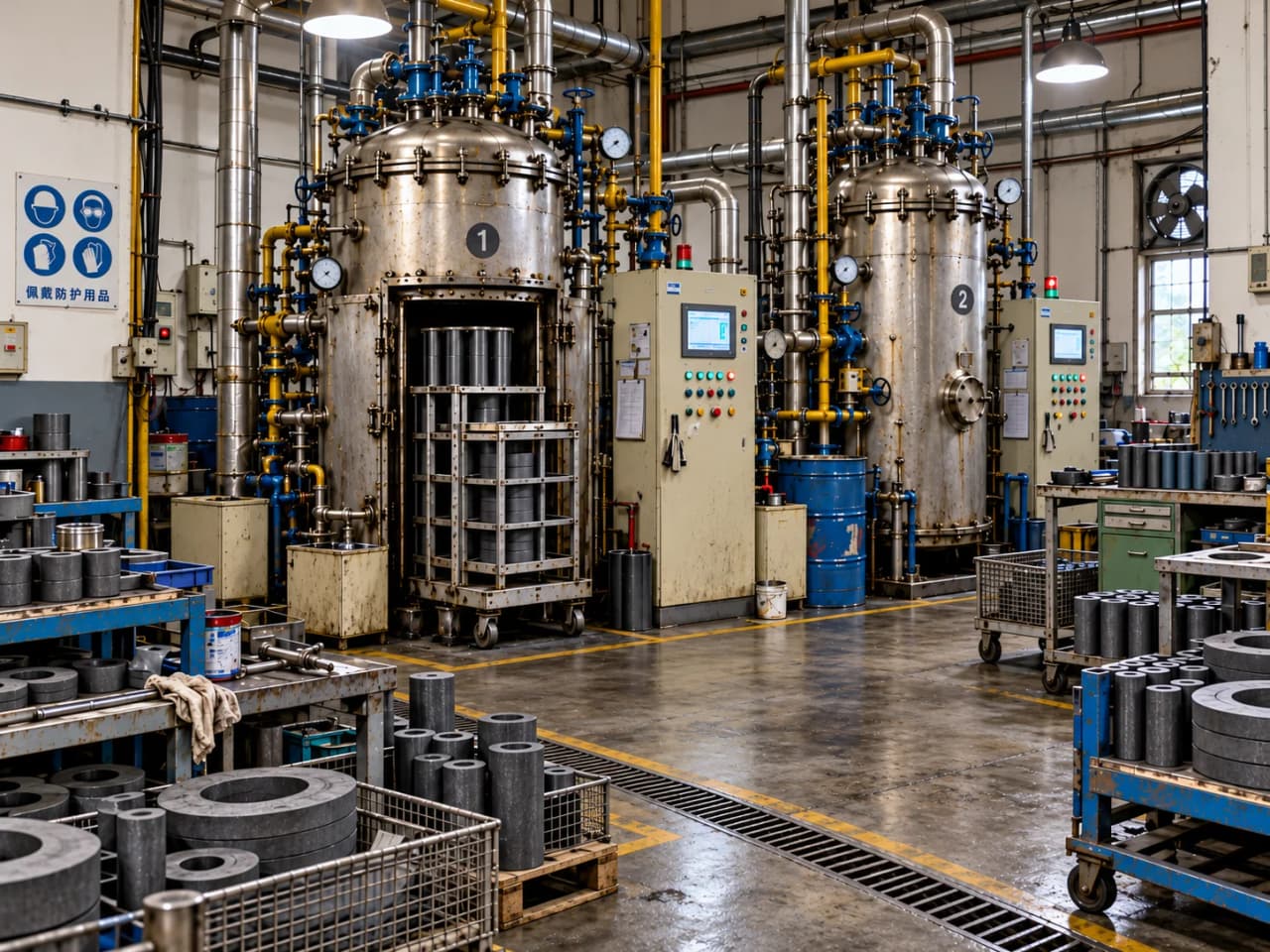
- ▸In 2023 Huahao Sealing systematically upgraded its impregnation process: optimized vacuum-pressure curves, an expanded impregnant matrix, and standardized curing and post-treatment
- ▸Open porosity dropped from roughly 3%–5% by volume to below 1%, sharply reducing the risk of medium seeping through pores
- ▸Compressive strength of resin-impregnated grades rose about 15%–30% to a typical 150–170 MPa; metal-impregnated grades exceed 180 MPa
- ▸Dry friction coefficient holds at 0.08–0.12 and falls to 0.05–0.08 under liquid lubrication; allowable dry-running PV is up about 20%
- ▸Three impregnant systems matched to duty — resin (−40 to 200°C), antimony (up to 400°C) and metal (up to 450°C) — covering chemical pumps, marine, power and high-temperature furnaces
- ▸Two illustrations — cross-section microstructure and final dimensional inspection — show impregnation results and quality control
목차
Impregnation is the step that takes a carbon graphite seal from "workable" to "durable." Carbon graphite offers self-lubrication, corrosion resistance and high-temperature capability, but a pressed compact is porous — its interconnected micro-pores form paths for the medium to creep through under differential pressure, which undermines both strength and sealing stability. In 2023, Huahao Carbon Graphite Sealing Co., Ltd. carried out a systematic upgrade of this core process: from the impregnant system and the vacuum-pressure curve to curing and post-treatment, refined item by item, with a single goal — to make every carbon graphite seal ring, bushing and split ring run longer and steadier in our customers' pumps and valves.
1. Why Impregnation Sets the Performance Ceiling
Carbon graphite parts typically show open porosity on the order of 15%–20% by volume, and these micro-pores are interconnected, forming channels for leakage. Impregnation forces a liquid impregnant into the pores under vacuum and then cures or polymerizes it to seal the open cells.
- Leak sealing: once the pores are filled, the through-channels beneath the sealing face disappear, eliminating the "no leak now, seepage later" risk
- Strengthening: the cured impregnant supports the pore walls, clearly raising compressive and flexural strength
- Better tribology: the impregnant forms a transfer film on the running face, lowering friction and improving seizure resistance
- Wider duty range: the impregnant defines the temperature ceiling and chemical compatibility — it literally decides where the part can be used
That is why how well a part is impregnated often matters more to service life than which graphite base grade was chosen.
2. Three Process Upgrades in 2023
2.1 Optimized Vacuum-Pressure Curve
Previously we used single-stage vacuuming followed by atmospheric soaking, which left gas trapped deep in the pores and limited penetration depth. In 2023 we moved to a multi-stage cycle: vacuum below −0.095 MPa held for 20–30 minutes, slow pressurization to 0.6–1.0 MPa held for 30–60 minutes, then immediate transfer to curing so the impregnant does not bleed back at the pore mouths.
The result is deeper impregnation: more uniform weight gain within the same grade, consistent seal depth across cross-sections, and a visibly narrower spread of properties between batches.
2.2 A Multi-System Impregnant Matrix
Different duty needs different impregnants. In 2023 we expanded from a mainly single-resin approach to three systems, selected by application:
- Resin: the most general, with good chemical resistance, rated −40 to 200°C, for clean water, seawater and most acid/alkali pump duty
- Antimony: rated up to 400°C with good dimensional stability, for hot oil, steam and high-temperature media
- Metal (copper/silver): high thermal conductivity and strength, rated up to 450°C, for high-PV and dry-running-prone applications
2.3 Standardized Curing and Post-Treatment
Impregnation is only half the job; curing decides the final properties. For resin-impregnated parts we use stepped curing at 150–180°C for 8–12 hours to prevent the impregnant from bleeding out or curing unevenly, followed by finish machining and dimensional re-inspection so sealing-face accuracy does not regress after pore sealing.
3. Before vs After: Typical Values
The figures below compare the same graphite base grade (values vary slightly with grade and size and are for reference only):
- Open porosity (volume): about 3%–5% before, below 1% after
- Bulk density: 1.80–1.85 g/cm³ for resin impregnation, up to 1.85–2.05 g/cm³ for metal impregnation
- Compressive strength: resin from about 120–130 MPa to 150–170 MPa (up about 15%–30%); metal can exceed 180 MPa
- Dry friction coefficient: stable at 0.08–0.12; 0.05–0.08 under liquid lubrication
- Allowable dry-running PV: about 20% higher, typically reaching 3.0–3.5 MPa·m/s
- Temperature range: resin −40 to 200°C; antimony up to 400°C; metal up to 450°C
4. What It Means for Customers
- Chemical pump users: more thorough pore sealing means less micro-seepage across the sealing face and fewer on-site "leak and rework" events
- Marine and offshore: better corrosion resistance and dimensional stability of resin grades against seawater and humidity
- Power and hot-oil systems: antimony grades keep their strength and conformability at high temperature, reducing hot-state leakage
- Dry-running or high-PV duty: metal grades conduct friction heat away more effectively and resist seizure better
For buyers and design engineers, the direct benefit is simple: tell us the medium, temperature, pressure and whether lubrication is permitted, and we will recommend the matching impregnant system and grade — instead of one graphite for every job.
5. Process and Inspection in Practice
Whether impregnation is done well comes down to two things: are the pores truly sealed, and are the dimensions still accurate. The two photos below show what we focus on.
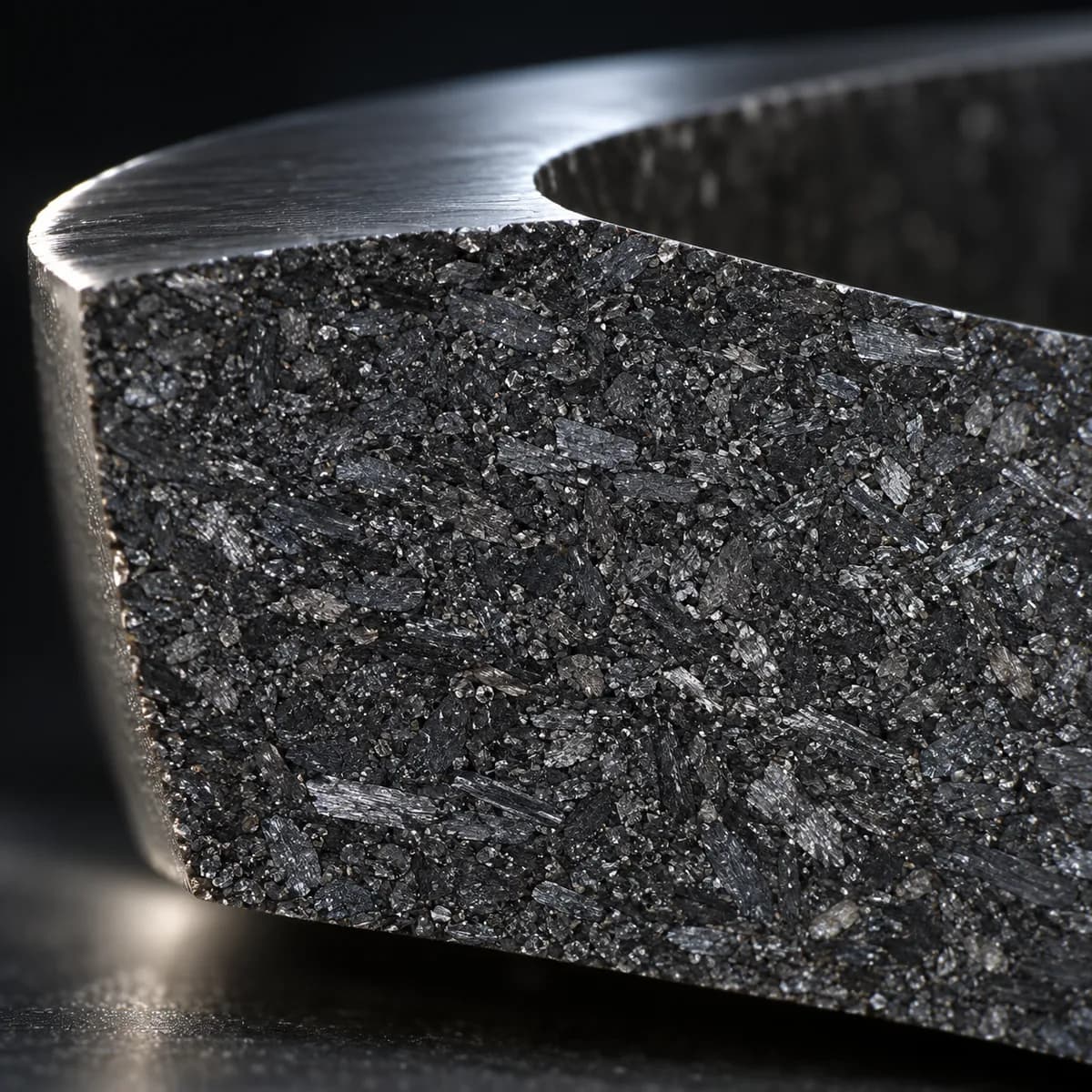
The photo above shows the microstructure of a carbon graphite seal ring cross-section, where graphite grains and the pores between them are clearly visible. The aim of impregnation is to fill those pores with resin, antimony or metal so the medium has nowhere to seep.
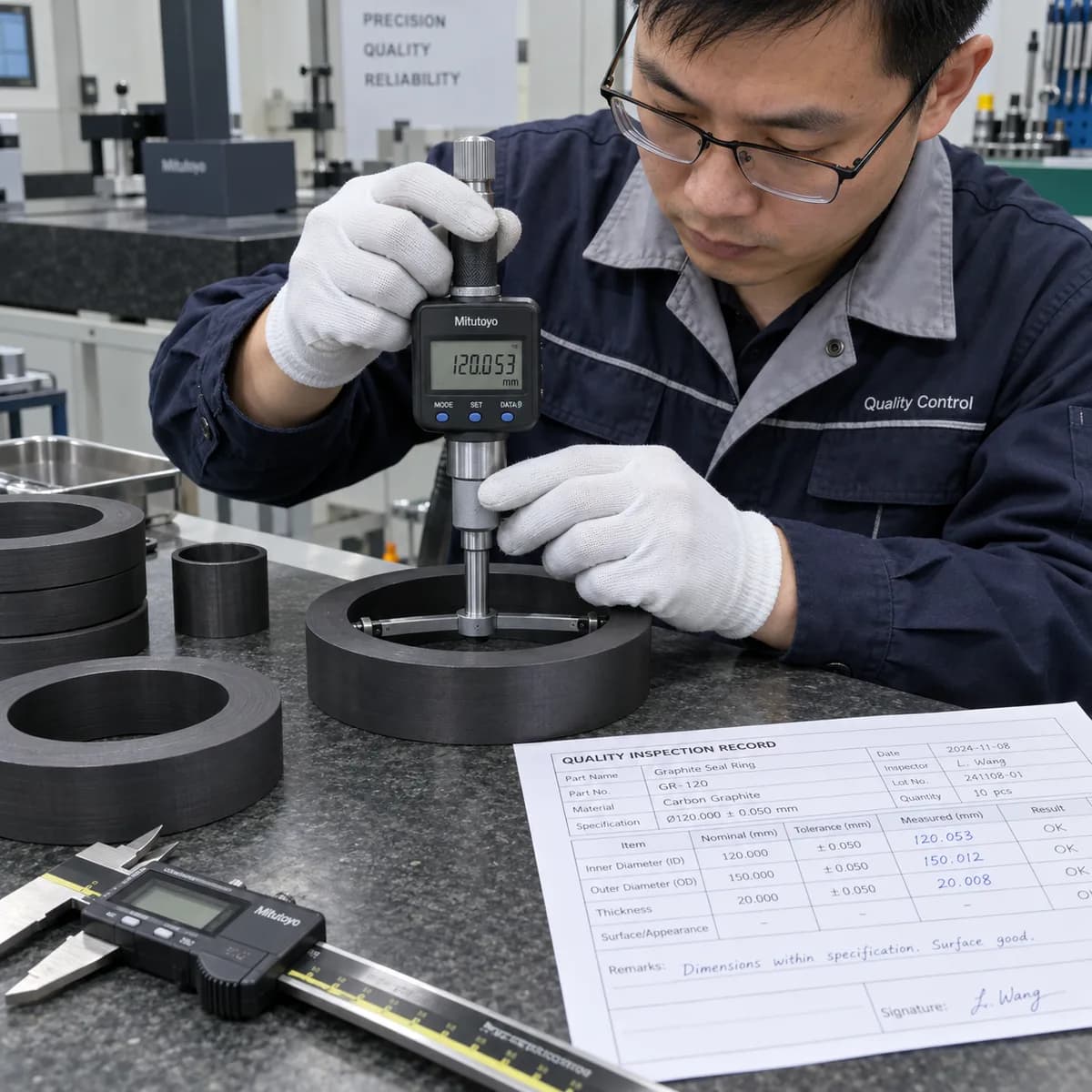
The second photo shows a dimensional re-check after curing: inner diameter, outer diameter and thickness are verified item by item with a bore gauge and calipers and logged on an inspection sheet, so sealing-face accuracy does not regress after pore sealing. That is what measurable, reproducible and traceable really means.
6. Closing Thoughts
From settling in Lu'an in 2018, the CNC upgrade in 2020 and our self-built factory in 2021 to the systematic impregnation upgrade in 2023, Huahao has kept doing the same thing: turning the "invisible" processes into ones that are measurable, reproducible and traceable. Impregnation is unobtrusive, yet it decides a seal's life and reliability — precisely where we are willing to keep investing. Going forward we will keep refining the impregnant systems by duty, and use stable processes and honest data to deliver more durable carbon graphite sealing solutions to pump, valve and chemical customers worldwide.