Share knowledge on graphite machining, material selection, precision control
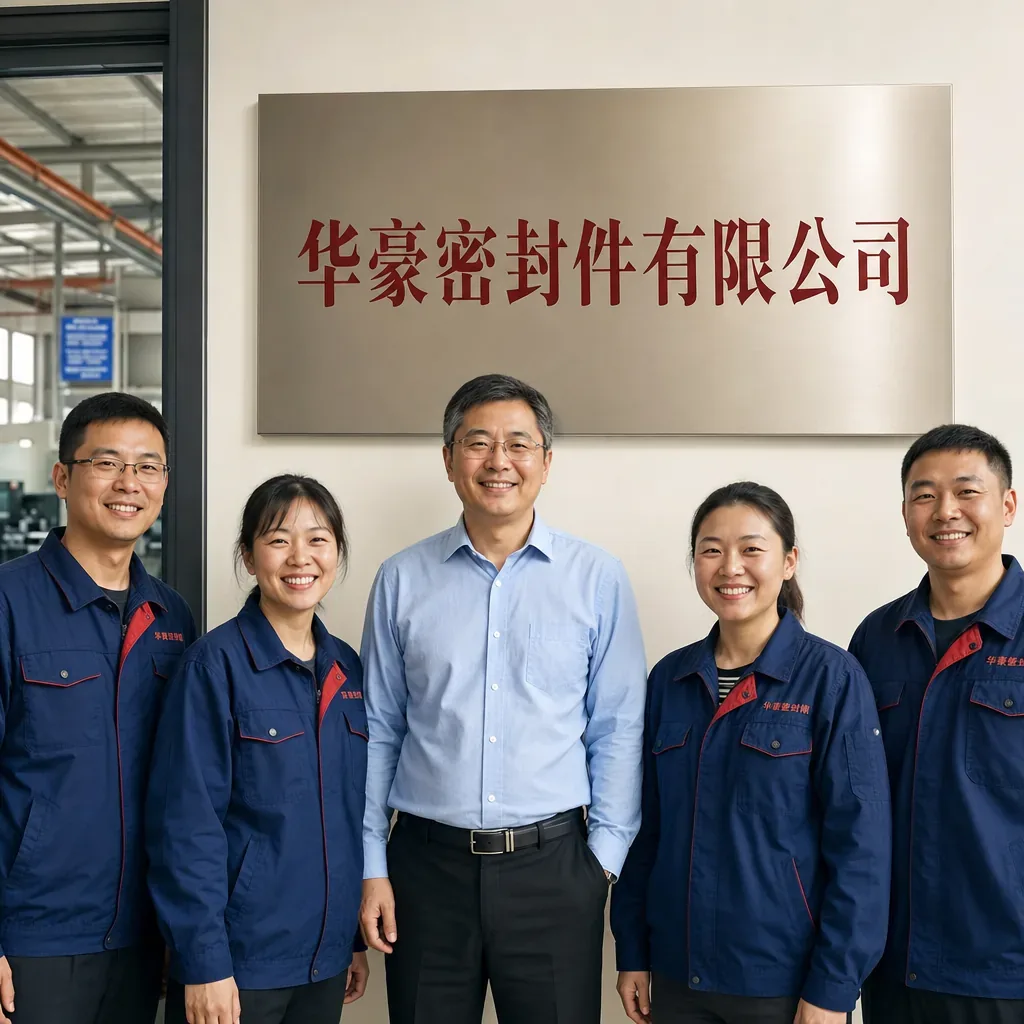
In 2018 the company relocated to Lu'an, Anhui and officially founded Huahao Carbon Graphite Sealing Co., Ltd. in Longtan Town Industrial Park, Huoqiu County — the cornerstone of our scale-up in carbon graphite sealing parts.
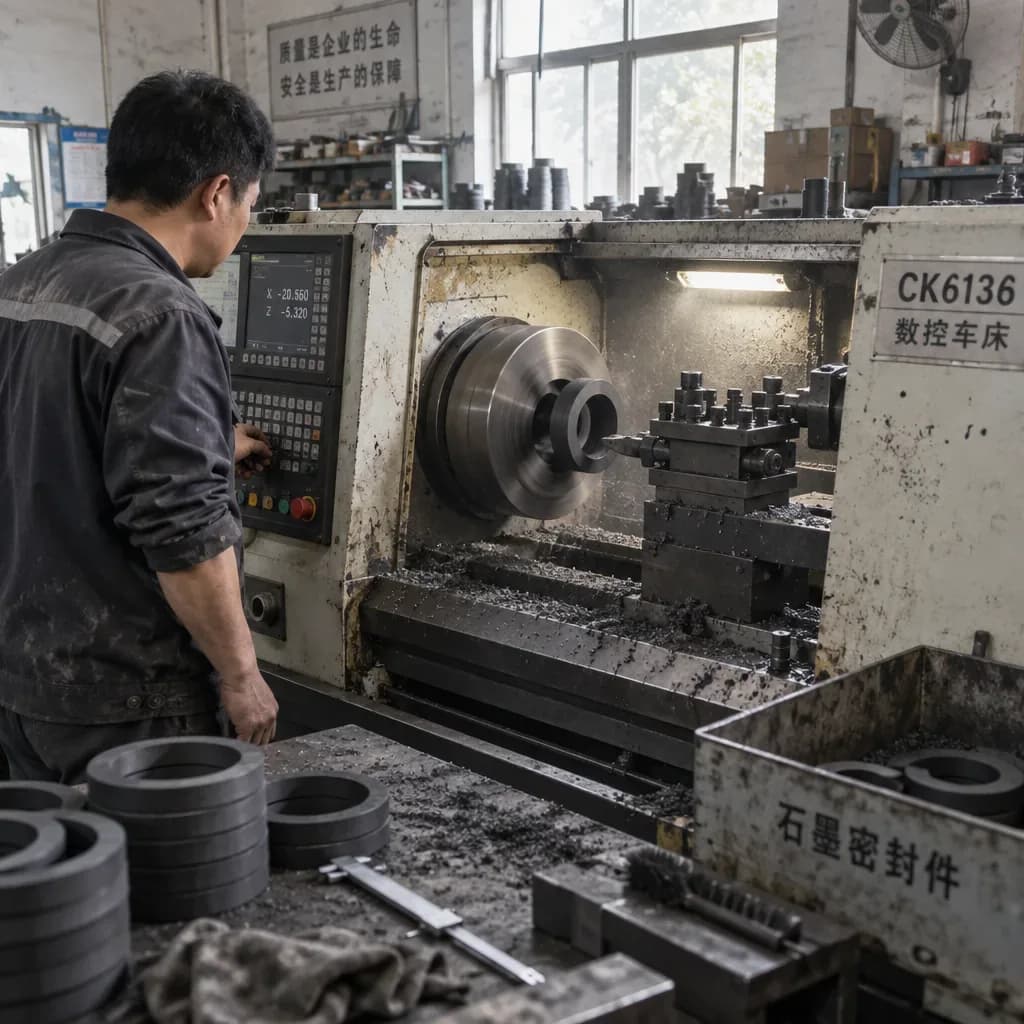
In 2020 we invested in CNC lathes and CNC machining centers, upgrading critical operations into a digitalized, automated precision system that sharply improved seal dimensional accuracy and batch-to-batch consistency.
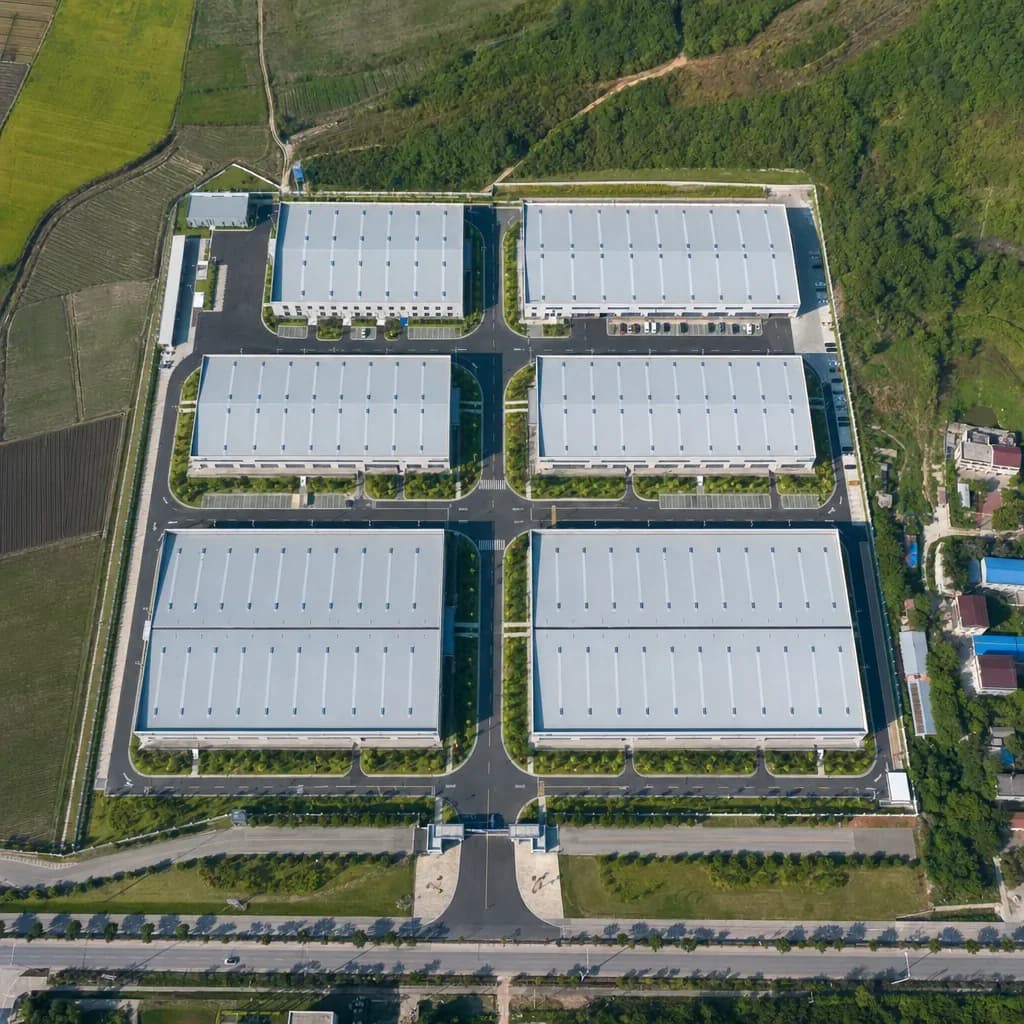
In 2021 our self-built large factory in Lu'an went into operation, zoned around a logical seal-making workflow with expanded CNC lines and inspection stations — lifting both capacity and quality.
Getting one selection parameter wrong on a carbon graphite seal ring can cut service life several-fold. This article gives item-by-item criteria for media corrosivity, temperature (600°C in non-oxidizing media, 350°C in oxidizing), pressure and PV value, speed and shaft diameter, plus how impregnation type (resin/antimony/PTFE) maps to operating conditions.
Antimony-impregnated graphite M106D measures 2.20 g/cm³ in density and 190 MPa in compressive strength, and serves above 400°C — the workhorse grade for hot oil pump seal rings. This article explains the essential difference between metal and resin impregnation, and where M106D fits and where it does not.
The same coke batch can yield very different porosity and density depending on the furnace temperature curve. This article breaks down heating-rate control in baking and graphitization (about 10-30°C/h), the effect of the 2400-3000°C peak on density and porosity, and how the curve governs the finished ring's thermal conductivity and wear resistance.
Eight causes cover most mechanical seal leakage: installation misalignment, spring failure, O-ring aging, face wear, cavitation, excessive axial float, flush failure and wrong material selection. This article gives a check method and threshold for each, so a systematic pass can locate the fault within half a day.
The two hard problems in reactor mechanical seals are large agitator shaft runout and thermal cycling. This article analyzes how runout destroys the face film, and gives material countermeasures (furan/epoxy impregnation, antimony-impregnated M106D), face width and balance ratio design, plus failure signatures under thermal cycling.
Whether a graphite seal ring needs replacing is decided by wear depth, not by the calendar. This article gives the reasoning for wear limits, how to use optical flats and micrometers, face appearance checks (scoring, heat cracking, chipping), and the practice of replacing the pair and keeping wear records.
0.0009mm flatness is the pass standard for mechanical seal faces — about one-eightieth of a hair's diameter. This article explains optical flat interferometry, how to read fringes (one fringe order is roughly 0.0003mm), light source and operating points, and why flatness decides whether the fluid film seals at all.
About 1.5 MPa of media pressure is the empirical divide between balanced and unbalanced seals: beyond it face pressure climbs steeply and graphite ring wear accelerates. This article explains load factor B, face pressure and PV value calculation, and common mistakes in balance ratio design.
For resin-impregnated graphite, the chemical weak link is the resin: furan (K) has the widest acid-alkali spectrum, epoxy (H) the best all-round resistance and adhesion, phenolic (F) the best value but poor alkali resistance. This article compares the three impregnations medium by medium, with their 150-200°C temperature ceilings.
Automotive water pump seal rings are low-cost, high-volume and hard-duty: long-term service in 90-120°C glycol coolant, compact cavities, and life matched to the vehicle. This article covers material choice, consistency control in small-size volume machining, and incoming acceptance points.
Baked carbon graphite rings leave the furnace with 10%-20% porosity and will weep if used directly. This article breaks down the full vacuum-pressure impregnation process: how vacuum level, impregnation pressure, holding time and the curing curve determine penetration depth and hold porosity below 2%.
Carbon graphite rings can run dry for a limited time — not indefinitely. This article explains the self-lubrication mechanism of the layered crystal structure, where the 0.04-0.15 dry friction coefficient comes from, how PV limits translate into a time boundary, and when dry running must stop.
Most centrifugal pump seal failures trace back to the carbon graphite ring. This article walks through three failure modes — wear, thermal cracking and fracture — with root causes including dry running, solids, cavitation, thermal shock and installation stress, plus engineering countermeasures for each.
Resin-impregnated graphite rings are not immortal. This article explains the two resin aging pathways, recommended storage conditions (temperature, humidity, darkness), the basis of a 2-3 year shelf life, and FIFO plus periodic re-inspection practice.
How much clearance when a seal ring seats in its housing? This article covers fit principles for stationary rings and housings, rotating rings and sleeves, the basis of typical radial clearances of 0.1-0.3 mm, the split between interference and float, and how dimensional-chain error becomes leakage.
When PV climbs, how do you pair the faces? This article gives the logic of carbon-graphite-vs-SiC pairing, PV capability differences across impregnated graphite grades, how to apply 2-3x safety factors to limiting PV, and the cooling measures high-PV duty demands.
Graphite's '600℃' capability comes with conditions: in air, noticeable oxidative mass loss starts around 450℃. This article explains the oxidation mechanism, the temperature-environment-life constraint, and the two engineering routes: oxidation-resistant impregnation and atmosphere protection.
How is 0.0009 mm face flatness (3 light bands) achieved? This article covers the rough-fine-polish process chain, lapping plate selection, slurry and pressure/speed parameters, and monochromatic-light flatness inspection.
Carbon graphite resists 150-300 MPa in compression yet cracks under one hammer blow. This article breaks down the three crack causes — installation stress, thermal shock and hammer assembly — with concrete crack-proof assembly actions and incoming-inspection points.
The core conflict in food and pharma sealing: low extractables yet resistance to hot alkaline CIP. This article explains why PTFE-impregnated graphite fits, the FDA 21 CFR compliance framing, CIP/SIP cleaning duty, and a selection checklist.
Every loss of face-temperature control shortens graphite ring life. Following the API 682 flush-plan framework, this article compares self-flush, external flush and circulating flush plans — their application scenarios, temperature-control logic and layout points — with flush-matching advice for 70–150 W/(m·K) graphite rings.
Hot water and steam fear flashing. Starting from why hot-water flashing gives no warning, this article lays out the full selection path: graphite's 70–150 W/(m·K) conductivity advantage, 600 °C non-oxidizing temperature capability, hard-face pairing and flush matching.
Babbitt impregnation drives porosity below 2% while a soft-metal shear layer pushes friction toward the low end of the 0.04–0.15 range. This article explains the mechanism, the roughly 120–150 °C temperature limit, and why water-based media are off-limits.
Raising peripheral speed from 20 m/s to 60 m/s turns per-revolution runout from a wear nuisance into a primary failure driver. This article quantifies the speed amplification of face wear and explains the control chain: balance grade, coaxiality and 0.0009 mm flatness machining.
Dry gas seals run contactless on a 3–10 μm gas film, and the graphite ring carries that film. This article explains how spiral grooves pump gas, why 0.0009 mm flatness and porosity below 2% are the floor for film stability, and how to configure particle protection.
A graphite ring passes a dozen inspection gates: raw-material ash, green density, fired porosity of 10%–20%, below 2% after impregnation, compressive strength of 150–300 MPa, flatness of 0.0009 mm. This article walks the gates in process order: what is measured and what is judged.
The core of face-pair selection is soft-against-hard: graphite (friction coefficient 0.04–0.15) against silicon carbide or tungsten carbide is the mainstream pair, while hard-on-hard is actually risky in clean water and light hydrocarbons. This article gives the common pairings and four prohibitions.
An abnormal ring on one pump is often the herald of a whole batch. This article covers batch sample retention, re-test criteria (porosity below 2%, compressive strength 150–300 MPa), a 6–12 month storage re-inspection interval, and the fields a traceability record should carry.
Caustic service doubles the test: NaOH concentration stacked on temperature. Furan-impregnated graphite is stable in alkali to roughly 200 °C, while the high-temperature, high-concentration band calls for evaluating metal impregnation. This article gives a concentration-temperature zoning path for material selection.
Three themes for H2 2026: deepening domestic substitution in high-end impregnated graphite, high-temperature/high-pressure demand pulled by petrochemical and coal chemical projects, and the spread of digital selection tools such as CTE online systems. This article unpacks the engineering drivers behind each trend.
Copper and copper-alloy impregnated graphite reinforces the pore network with metal: bronze-impregnated grades test at 260 MPa compressive strength, Shore hardness HS 80, thermal conductivity 85 W/(m·K), with residual porosity below 1%. This article explains why it suits water, low-lubricity and dry-running-prone services, and where to draw the line against antimony- and resin-impregnated grades.
A carbon graphite grade combines a base graphite with an impregnation code: F = phenolic, H = epoxy, K = furan, D = antimony. This article decodes the grade system, lists real data (density, compressive strength, hardness) for grades such as M106H, M106D, M106K, M191T and 204B, and shows a four-step selection by media, temperature, pressure and P-V value.
Carbon graphite is not a natural ore but an engineered material made from petroleum coke, pitch coke and flake graphite through high-temperature graphitization. This guide covers its material definition, microstructure, manufacturing process, impregnation modification and industrial applications for engineers and procurement teams.
In the sealing industry, "graphite" and "carbon" are often used interchangeably, yet they differ fundamentally in manufacturing process, crystal structure, hardness and lubricity. This article distinguishes graphite from carbon and provides practical seal selection guidance.
A graphite seal does not rely on "hard-on-hard" contact but on a 0.5-3μm micro fluid film between faces, combined spring and media pressure, and graphite self-lubrication. This article explains the three core mechanisms of graphite seals.
Carbon graphite and silicon carbide are the two most common seal face materials, but they are not competitors — they are complementary pairing materials. This article compares their physical properties, chemical resistance, cost and typical applications, and explains why "carbon graphite + silicon carbide" is the industry-standard pairing.
Grades like M106D, M106K and M120K are the most commonly used carbon graphite seal materials, but their impregnation types, performance and suitable service conditions differ. This article provides a selection decision process based on media, temperature and pressure.
In 98% concentrated sulfuric acid service, carbon graphite seal ring average service life is only 35% of that in dilute acid conditions. This article summarizes three easily overlooked failure precursors from a seal engineer's perspective — discoloration of seal faces, abnormal rise in media viscosity, and sudden friction torque spikes — with temperature, pressure and leakage thresholds for each troubleshooting step.
Hydrofluoric acid is one of the most aggressive corrosive media in sealing engineering. Based on field data from 17 chemical pumps validated by Huahao Sealing, this article breaks down a five-step HF-grade graphite seal selection workflow: concentration classification → temperature range mapping → impregnation recommendation → mandatory SSIC mating ring → PV value verification. Paired with Huahao PTFE-impregnated graphite rings, the solution delivers 24-month life, <0.1 mL/h leakage, and 62% lower maintenance cost.
When a magnetic pump starts without liquid, the carbon graphite seal ring and SiC mating ring enter full dry friction within 0.3s, driving face temperature from room temperature to 250°C in 8 seconds — exceeding the phenolic resin impregnation glass transition temperature Tg=180°C. This article analyzes the three thermal failure stages and provides 4 pre-startup checks plus temperature protection solutions.
Seal failures in 300–350°C thermal oil pumps plague the petrochemical and fiber industries. This paper compares four impregnation types — phenolic, furan, PTFE, and antimony metal — under high-temperature thermal oil conditions. Huahao Sealing M106D antimony-impregnated carbon graphite seal rings deliver an annual wear rate of only 0.015 mm at 320°C, 1/12 that of phenolic impregnation. After upgrading 22 hot oil pumps, a Zhejiang chemical fiber plant extended seal life from 3 months to 18 months per pump, saving ¥1.283 million annually in maintenance and downtime losses.
RO seawater desalination high-pressure pumps operate at 5.0-6.5 MPa discharge, where original copper alloy bushings last only about 3 months in chlorided seawater with sand. This article presents a PTFE-impregnated graphite bushing + duplex 2205 sleeve combination whose wear rate runs an order of magnitude below aluminum brass, with leakage controllable below 0.1 mL/h.
220°C saturated steam boiler feedwater and steam-circulation pumps universally suffer blistering and leakage of resin-impregnated carbon graphite seal faces. Huahao Sealing's 2024 failure-analysis database shows phenolic-impregnated materials have a 38% blistering rate in 220°C saturated steam, averaging 1,470 h before 0.5–2 mm diameter blisters form, with spallation pushing leakage beyond 5.6 mL/h. This paper systematically explains the triple blister mechanism (water-swelling → steam-phase-change expansion → thermal-stress spallation), compares three impregnates: furan M140K drops blister rate to 4%, antimony M106D records 0%; delivers a steam P-T-impregnate selection matrix, with a cost-accounting method for the upgrade.
High-temperature concentrated-caustic pump seal failures plague alumina, chlor-alkali, and viscose fiber industries. Industry failure data shows: in 50% NaOH at 120°C, 73% of carbon graphite + SiC failures stem from "alkali-embrittlement cracking" — NaOH reacts with SiC/SiO₂ to form sodium silicate with 3× volume expansion, causing intergranular cracks in the carbon graphite matrix. This paper compares failure rates across 32% NaOH / 80°C vs 50% NaOH / 120°C, delivers an alkali-concentration vs temperature safe-operating boundary map, and recommends a combination of antimony-impregnated M106D graphite + SSIC hard ring + Hastelloy C-276 springs. After 28 evaporation-circulation pumps at a Shandong alumina plant were upgraded, seal life rose from 1.6 months to 14 months, saving ¥2.156M annually.
During centrifugal pump startup, mechanical seal closing force ramps from 0 to 0.7 MPa in as little as 0.2 s, producing an instantaneous PV of 6–8 MPa·m/s — well beyond the 4–5 MPa·m/s continuous-service limit. Huahao Sealing's 2024 large-sample statistics reveal 29% of carbon graphite seal "early wear-through" failures occur within 30 seconds of startup; chlor-alkali tower-feed pumps suffer as many as 2.1 startup-related failures per pump per month. This paper derives an analytical startup PV formula from transient fluid dynamics, compares three cushioning schemes (delayed pressure-rising valve, VFD soft-start, Huahao graded-pressure face design): Huahao's 3-stage conical graded face reduces startup shock by 48%. After 8 feed pumps at a Shanghai chlor-alkali chemical plant were upgraded, startup failures dropped from 2.1/pump·mo to 0.2/pump·mo, saving ¥183K per pump annually or ¥1.464M plant-wide per year.
350°C vacuum residue hot oil pumps combine high temperature, catalyst fines and coking tendency. Phenolic-impregnated rings average about 2 months of life, failing by face cracking and abrasive wear. Upgrading to M106D antimony-impregnated rings with WC mating faces and high-temperature alloy springs extends life beyond a year, with stable friction (0.04-0.045) and wear around 0.013 mm/1,000 h. Decide on total annual seal + labor + downtime cost.
Electroplating multi-medium switching service (200 g/L CrO₃ + 300 g/L NiSO₄ + Au(CN)₄⁻, alternating pH 1–5 every 8 h) is severely corrosive. Standard resin-impregnated graphite seals average only 3 months life before resin-swell / interface-corrosion leakage. Huahao Sealing PTFE-impregnated graphite carbon graphite + SSIC-B silicon carbide hard ring + PTFE-clad FFKM O-rings are the established selection for multi-bath electroplating filtration pumps: life beyond a year, leakage below 0.1 mL/h, and visibly lower product plating defects.
Carbon graphite materials exhibit a coefficient of thermal expansion (CTE) range of (1–5)×10⁻⁶ /°C. When the CTE mismatch vs. the hard ring exceeds 3×10⁻⁶ /°C, the seal leakage rate surges from <0.1 mL/h to >12.4 mL/h after 300 thermal cycles (ΔT = 250°C), and cyclic thermal stress causes a 67% incidence of radial cracks in the hard ring. Huahao Sealing proposes the "CTE Matching Five-Parameter Selection Method": ① graphite CTE ±0.3; ② hard-ring CTE ±0.3; ③ |ΔCTE| ≤ 2.0×10⁻⁶ /°C; ④ average face ΔT ≤ 35°C; ⑤ cycle ramp rate ≤ 2°C/min. Selection matrix provided: M106K Sb (CTE 2.3) + SSIC (4.0) = OK; M106F phenolic (4.5) + WC (5.2) = OK; M120K + RBSiC (3.2) = NG (18.5× thermal-crack risk). Huahao provides a FREE CTE-matching calculation system. At one petrochemical plant, 216 pumps upgraded under this method reduced cycle-leak failure rate from 28% to 3%.
Intermittent start-stop equipment like food/pharma CIP pumps and chemical unloading pumps frequently experience 20–60 second completely dry-friction startup (zero liquid). Traditional monolithic-ring carbon graphite thrust bearings have a PV ceiling of only 1.8 MPa·m/s, wearing through in 2 months on average. Huahao Sealing's innovative combination of **Three-Lobe segmented structure + wedge-shaped convergent oil grooves + M106D antimony-impregnated graphite** compensates thermal deformation via lobe-to-lobe elastic clearances and generates hydrodynamic wedge lift. This boosts intermittent dry-run PV ceiling from 1.8 MPa·m/s to 5.2 MPa·m/s (+189%). After 36 CIP centrifugal pumps at a large food group (240 starts/day each) were upgraded, thrust bearing average life rose from 2 months to 10 months, cutting annual downtime losses by ¥620,000. The design has become the food-grade hygienic pump standard.
API 610 high-speed hydrotreater feed pumps (φ75 mm shaft, 3,600 r/min, 42.4 m/s mean face linear velocity) using conventional resin-impregnated carbon graphite suffer wear as high as 0.08 mm/1,000 h with average life of only 4,200 h (~6 months). Huahao Sealing's combined solution of M106D antimony-impregnated high-purity carbon graphite ring + spiral-groove hydrodynamic hard ring + circumferential pressure-relief grooves cuts wear rate to 0.009 mm/1,000 h, achieving 20,000+ hours actual service with stable leakage <0.05 mL/h. After 12 diesel-hydrotreater feed pumps at a large Zhejiang petrochemical plant were upgraded, savings reached ¥380K/pump annually or ¥4.56M plant-wide per year — the industry benchmark case for hydroprocessing high-speed pump seals.
Dry screw vacuum pumps in semiconductor, lithium battery, and pharmaceutical industries pump organic solvents / corrosive gases. The fore-stage bearing thrust ring operates 10% of travel in fully dry friction (no oil no liquid). Traditional monolithic phenolic rings wear out in 3 months average. Huahao Sealing's innovative Three-Lobe structure + M106D antimony-impregnated graphite + TiN-coated mating disc combination, operating at 3,000 r/min, 4.5 kN axial load, PV = 2.8 MPa·m/s under intermittent dry-run, delivered only 0.004 mm/1000 h wear rate after 8,000 hours — 1/24 of the traditional phenolic 0.096 mm/1000 h. After 18 Edwards GV80 dry screw pumps at a large Shanghai semiconductor wafer fab were upgraded, thrust-ring life rose from 3 months to >36 months. Spare-part cost dropped from ¥36K to ¥7K per pump annually. 18-pump saving: ¥730K/yr spares + >¥12M production revenue benefit.
Carbon graphite seal rings for micro gas turbines, molecular vacuum pumps, and high-speed centrifugal compressors running 10,000–20,000 r/min suffer: every +1 μm face runout DOUBLES leakage rate and TRIPLES wear; exceeding 2 μm runout causes catastrophic fracture at speed. Standard industry CNC turning + conventional lapping yields only 6–8 μm runout / Ra 0.1–0.2 μm — suitable for <6,000 r/min only. Huahao Sealing independently developed the "High-Speed Graphite Ring 4-μm Process System": pre-turning stress-relief annealing, German Hermle C22 5-axis mirror turning (natural single-crystal diamond tool), 3-stage double-face CMP (Chemical Mechanical Polishing), and 100% final inspection on Zeiss G2 CMM + Taylor Hobson profilometer. Stable mass output: TIR ≤ 0.4 μm (95% CpK = 1.57), Ra ≤ 0.02 μm ultra-mirror, flatness ≤ 0.8 μm — certified for 12,000 r/min class. 800,000 rings manufactured 2022–2025 with ZERO in-field fracture events. Average wear rate for customers dropped 90.3%. System passed dual ISO 9001 + ISO 14001 + API 682 audits June 2025; now open for contract machining (first piece FREE).
Bottom-pump residue runs 350–380°C while resin-impregnated graphite carbonizes above 300°C. In three steps — material (antimony-impregnated graphite), structure (balanced type) and flush plan (API 682 Plan 23) — this article lays out a selection workflow for hot oil pump seals with refinery field cases.
For the strong NH₃ corrosion and 15-25 MPa high-pressure service of high-pressure carbamate pumps and liquid ammonia pumps in ammonia synthesis units, this article covers carbon graphite seal material selection (furan resin-impregnated graphite), structural design (tandem multi-face), auxiliary systems (diaphragm pump barrier fluid), and typical failure cases.
For paper machine drying cylinder steam heating service (150-200℃ saturated steam, condensate water hammer, pulp black liquor infiltration), this article covers carbon graphite seal material selection (epoxy-impregnated graphite), structural design (split type with bellows), steam barrier system, and typical application cases.
For Czochralski (CZ) silicon crystal furnaces operating at 1400℃ molten silicon, 10⁻⁵ Pa high vacuum, and Ar protective atmosphere, this article covers carbon graphite seal applications at the quartz crucible shaft, seed crystal shaft, and furnace bottom flange — material purity requirements (metallic impurities < 10 ppm), structural design (bellows seal + water cooling), typical failure modes, and Huahao Sealing case studies.
For wear and corrosion issues of guide rollers, printing rollers, and steamers in textile printing and dyeing machinery under 130-180℃ high-temperature steam and dye/chemical auxiliary media, this article covers carbon graphite bushing material selection (furan resin-impregnated graphite), structural design (self-lubricating with grooves), installation and maintenance points, and Huahao Sealing application cases.
For propeller stern shaft wear and corrosion under seawater immersion, sediment scouring, and long-distance heavy load, this article covers carbon graphite water-lubricated bearing material selection (epoxy-impregnated graphite + carbon fiber reinforcement), structural design (3/6-lobe water chamber zoning), installation alignment points, and Huahao Sealing cases.
For 121-143℃ steam sterilization (CIP/SIP) and food-grade lubrication requirements of homogenizers, emulsifying pumps, and bottle washers in food and pharmaceutical industries, this article covers FDA-grade carbon graphite seal materials (pure graphite + food-grade resin impregnation), structural design (lubrication-free springless), compliance certification points, and Huahao Sealing cases.
For the problem of SiC seal cracking and leakage caused by 5-15% solid particles (CaSO₄·2H₂O, CaCO₃, SiO₂) and fluoride ions (F⁻ 50-200 mg/L) in FGD slurry circulation pumps of thermal power plants, this article covers fluoride-resistant carbon graphite impregnation material selection, structural design (cartridge + flushing plan PLAN 32+64), and Huahao Sealing cases.
For the problem of fast mechanical seal rotating ring wear and startup smoke in oil-free screw vacuum pumps extracting condensable organic solvent vapors (methanol, acetone, ethyl acetate) in chemical and pharmaceutical industries, this article covers antimony-copper alloy impregnated carbon graphite dry gas seal ring selection, spiral groove hydrodynamic design, and Huahao Sealing cases.
For the problems of frequent wear of aluminum alloy labyrinth teeth under rotor vibration and excessive leakage in cracker gas centrifugal compressors of ethylene plants, this article covers carbon graphite labyrinth insert material selection (fine-grained impregnated graphite), labyrinth structure (straight-through/staggered), clearance design, and Huahao Sealing cases.
Baked carbon graphite seal rings leave the furnace with 10%–20% porosity and will leak without impregnation. Built around the impregnation step that drives porosity below 2%, this article explains material composition, sealing mechanism, typical structures and applications, with the working meaning of key data: dry friction coefficient, thermal conductivity and temperature limits.
Why can graphite bushings run without grease? This article explains the principle of self-lubrication from three levels: crystal structure, transfer film mechanism and operating-condition matching, with Huahao's practice in food, textile and chemical industries.
Does higher hardness always mean better wear resistance? This article analyzes the non-linear relationship between hardness and wear resistance of carbon graphite sealing materials from three angles: test methods, formulation and condition matching.
Phenolic, furan, epoxy, antimony, Babbitt, PTFE—what are the characteristics of the six mainstream impregnated graphite types? This article provides a selection decision matrix summarized by Huahao across three dimensions: medium, temperature, load.
Mechanical seal failure is one of the main causes of unplanned equipment downtime. Based on Huahao's field service cases, this article analyzes failure diagnosis and prevention across four dimensions: face wear, secondary seals, springs and corrosion.
Improper installation is one of the main causes of early mechanical seal failure. Based on Huahao's field service experience, this guide provides a standardized procedure, common errors and quality acceptance points for centrifugal pump graphite seal ring installation.
Chemical pump conditions vary widely and carbon graphite seal selection directly affects equipment safety and life. Based on Huahao's selection cases, this article provides a systematic guide across four dimensions: media, temperature-pressure, speed and safety requirements.
Conventional grease fails above 200°C, while graphite bearings operate stably at 600°C. This article explains the high-temperature mechanism, typical applications and design points of graphite bearings.
Three segmented arcs staggered 120° apart let the ring be fitted without removing the piston. This article covers structure, spring tension design (0.02–0.05 MPa contact pressure) and assembly, including the dedicated expander tool.
Dimensional tolerances of graphite seals directly affect sealing performance. This article interprets tolerance requirements of GB, DIN, API and other mainstream standards, analyzes the relationship between machining precision and sealing, and provides Huahao's inspection standards.
Impregnation determines porosity, strength and temperature capability: resin impregnation drives porosity below 2% but decomposes near 220°C, while antimony impregnation holds 180–240 MPa compressive strength at 450°C. Comparing both routes with actual process data, this article concludes with selections for chemical, water pump and mechanical seal services.
The carbon graphite matrix itself shrugs off nearly all acids and alkalis — the weak link is almost always the impregnant: phenolic fails in alkali, furan survives acid/alkali cycling, antimony pits in chlorides. With a compatibility quick-reference table across acids, alkalis, salts and organic solvents, this guide helps pin down seal ring and bushing selection.
Submersible pumps operate fully submerged, where the guide bearing's lubricity and wear resistance determine overall pump life. This article reviews the advantages, selection criteria, and failure analysis of graphite bushings in submersible pumps, drawing on supply cases from Huahao Sealing Co., Ltd.
Marine stern shaft seals must keep seawater out of the engine room while preventing lubricant leakage into the water. As the core friction pair, carbon graphite seal rings must withstand seawater corrosion, shaft vibration, and temperature swings. Based on Huahao Sealing Co., Ltd. cases, this article reviews graphite applications and selection in stern shaft seals.
Food, beverage, and pharmaceutical industries impose far higher requirements on sealing materials than general industry. Carbon graphite seals must comply with FDA, EC1935/2004 and similar regulations to avoid product contamination. This article reviews material selection, testing standards, and certification for food-grade graphite seals.
The friction coefficient of carbon graphite is not a constant: M106K measures 0.08 at 100°C and 0.15 at 200°C, rising sharply once PV exceeds 10 MPa·m/s. This article provides measured data and design boundaries across material formulation, mating part, lubrication and operating parameters.
Graphite is soft but brittle, prone to edge chipping, tool wear, and dust during machining. This article systematically reviews CNC graphite machining tool selection, cutting parameters, and process flows to achieve high-precision, low-loss graphite seal manufacturing.
Reducing face roughness from Ra 0.4 μm to 0.05 μm cuts leakage by 90%. This article sets roughness requirements per region — seal faces, bushing bores and more — with measurement methods and process controls, including tool-replacement thresholds.
Nuclear power plants demand the ultimate seal reliability. Carbon graphite — with radiation resistance, high temperature tolerance, and chemical inertness — plays a critical role in reactor coolant pumps and emergency core cooling systems. This article reviews the special requirements, typical applications, and quality assurance of nuclear-grade graphite seals.
Although graphite seals resist corrosion and high temperature, improper storage and maintenance can still cause damage. This article systematically covers storage conditions, transport protection, pre-installation inspection, in-service maintenance, and shutdown care to help users maximize seal life.
An in-depth comparison of carbon graphite seal rings versus PTFE seals across temperature resistance, wear performance, chemical stability and PV value to help engineers select correctly in chemical, high-temperature and vacuum applications.
Analyzing the four typical wear mechanisms of carbon graphite bushings — abrasive, adhesive, corrosive, and fatigue wear — revealing how microstructure affects macroscopic service life and providing theoretical guidance for equipment maintenance and selection.
A systematic introduction to the critical applications of carbon graphite seals in vacuum coating, semiconductor manufacturing, molecular pumps, and vacuum furnaces, analyzing their irreplaceable advantages of low outgassing rate, self-lubrication, and high-temperature resistance.
A detailed explanation of PV value (pressure × velocity) calculation formulas, correction factors, and safety margin selection methods, with worked examples demonstrating how to evaluate the load capacity and service life of carbon graphite seal rings based on operating conditions.
An analysis of the technical requirements for carbon graphite seals in key lithium battery processes including mixing, slurry preparation, coating, and calendering, examining the challenges of harsh media such as NMP solvent and electrolytes.
A systematic introduction to 18 key quality inspection items for carbon graphite seals, including density, hardness, compressive strength, porosity, impregnation rate, and dimensional accuracy, with testing equipment and acceptance criteria.
A detailed explanation of carbon graphite seal packaging levels, shock and moisture protection measures, transport method selection, international shipping standards, and arrival inspection procedures, ensuring precision seals reach customer sites safely.
Analyzing the thermal expansion coefficient characteristics of carbon graphite materials, comparing CTE values of different impregnation types, and analyzing the impact of temperature changes on seal clearances, interference fits, and stress distribution through examples.
Through five typical failure cases — thermal cracking, abrasive wear, chemical corrosion, fatigue spalling, and assembly stress cracking — providing in-depth analysis of failure mechanisms and actionable preventive countermeasures.
A forward-looking analysis of the development trends of the carbon graphite seal industry over the next decade in materials innovation, intelligent manufacturing, green low-carbon, and emerging applications, providing strategic reference for industry participants.
A detailed walkthrough of cleaning, inspection, alignment and torque control during carbon graphite seal ring installation and removal, helping avoid brittle cracking and face damage while extending service life.
Comparing thermal conductivity of carbon graphite, metal-impregnated graphite, PTFE, and ceramics; analyzing heat conduction mechanisms and grain-boundary scattering; exploring applications in seals, bearings, and heating elements.
Detailed formulas for mechanical seal face pressure, spring pressure, and media pressure; load factor K values for balanced and unbalanced seals; complete calculation demonstrated via centrifugal pump example.
Recommended clearance values between carbon graphite bushings and shafts for water, oil, and gas media; detailed thermal expansion compensation, run-in allowance, and tolerance allocation ensuring stable equipment operation.
Systematic summary of carbon graphite seal ring failure modes including face wear, thermal cracking, brittle cracking, corrosion erosion, and flush wear; causes analysis and preventive measures for extended seal life.
Comparing corrosion resistance data of antimony, copper, resin, and PTFE-impregnated graphite in various media; introducing ASTM and GB standard test methods; providing scientific selection basis.
For centrifugal, reciprocating, and screw compressors, presenting application differences of graphite seal rings, graphite piston rings, and graphite packing rings; selection for high-temperature, high-pressure, and corrosive conditions.
Testing impact toughness and fracture toughness data; comparing impact resistance of antimony, copper, and resin-impregnated graphite; proposing integrated enhancement through structural design and material modification.
Detailed flatness detection techniques including interferometry, dial indicator, and pneumatic gauging; judgment standards and operation points for different accuracy grades ensuring seal face quality.
Building life prediction models based on wear rate, PV value, temperature, and media corrosion; validating model accuracy with field data; enabling preventive seal maintenance.
Addressing the three key variables of reactor conditions — pressure, temperature and media — this guide details selection criteria for carbon graphite seal rings, covering the applicable boundaries and material choices for mechanical, packing and magnetic drive seals.
Starting from the brittleness characteristics of graphite bushings, this article details the fit tolerance design principles for bushings with shafts and housings, including critical calculations for H7/d8 and H8/f7 fits, thermal expansion compensation and recommended assembly clearance.
An in-depth analysis of factors affecting the thermal conductivity of carbon graphite materials, including graphitization degree, grain size, porosity and impregnation process, providing data support for high-temperature sealing and thermal design.
Detailed explanation of design calculations for mechanical seal spring pressure, including face pressure composition, recommended spring pressure values, ranges for different operating conditions, and design principles for media pressure compensation.
In-depth analysis of the friction heat generation mechanism, dissipation paths and temperature rise calculation for graphite seal rings, providing thermal balance equation-based heat dissipation design methods including flushing liquid flow, cooling jackets and material selection strategies.
Detailed explanation of carbon graphite seal rings in automotive water pumps, covering operating characteristics, material selection, typical failure modes and preventive measures, providing selection reference for automotive component engineers.
Detailed explanation of impregnation, coating, sulfidation and other surface treatment processes for graphite seals, including process principles, parameters, performance improvement effects and applicable scenarios, providing process reference for seal selection.
In-depth analysis of the mechanism by which carbon graphite porosity affects sealing performance, including pore types, permeability calculation, impregnation process compensation, and recommended porosity values for different sealing scenarios.
Detailed explanation of heat shrinking assembly process for graphite rings and metal seats, including interference design, heating temperature calculation, heating/cooling rate control, and typical failure mode analysis, providing technical guidance for heat shrinking processes.
Summarizing the 10 most common mistakes in carbon graphite seal ring selection, including material selection, condition matching, fit design, installation and maintenance, with correction solutions to help engineers avoid pitfalls.
Based on field operation data from 500+ graphite bushing sets supplied by Huahao Sealing Co., Ltd., this article analyzes the influence weights of temperature, load, and media on service life, establishes a life prediction model, and proposes engineering optimization solutions.
A systematic analysis of common API 682 flush plans including Plan 11/13/21/23/32/53A, covering applicable scenarios, advantages, disadvantages, and selection principles for optimal flush plan matching with carbon graphite seal rings.
Detailed analysis of pairing principles between carbon graphite seal rings and mating materials such as silicon carbide, alumina, and tungsten carbide, examining friction coefficients, wear rates, and applicable conditions for different pairing schemes.
Analyzing hygienic applications of carbon graphite seals in food, beverage, and pharmaceutical machinery, including FDA-compliant material selection, lubrication-free design, and CIP/SIP cleaning compatibility to meet food safety standards.
Analyzing material cost composition, processing cost control, and full lifecycle cost optimization strategies for carbon graphite seals, reducing total cost by 20%-40% through impregnation selection, standardized design, and predictive maintenance.
Comparing the application of Shore HS, Rockwell HRA, Brinell HB, and Shore D hardness testing methods in carbon graphite materials, analyzing accuracy, repeatability, and applicable scenarios to provide selection basis for quality control.
Detailed analysis of machining allowance distribution principles, tool material selection, and cutting parameter optimization for carbon graphite seal rings, covering key processes including rough turning, fine turning, and grinding to ensure seal dimensional accuracy and surface quality.
Interpreting mechanical seal leakage limits in API 682 and GB/T 14295 standards, analyzing leakage determination criteria under different operating conditions, and providing leak cause diagnosis and response solutions.
Detailed analysis of carbon graphite bushing installation fixture design principles, specialized tool usage methods, and installation process specifications, analyzing early failure modes caused by common installation errors and providing professional installation solutions.
Analyzing the development trends of the carbon graphite seal ring market in 2026, including growing demand from emerging applications such as new energy, semiconductors, and hydrogen energy, as well as domestic substitution and material technology innovation directions.
Detailed analysis of the carbon graphite seal customization process, including requirement confirmation, material selection, solution design, sample trial production, mass production, and delivery service, helping customers efficiently complete customization requirements.
Contact our engineering team for technical specifications, custom solutions, or competitive quotes. We'll respond within 24 hours.